Wednesday, April 05, 2006

Who Can Partake?


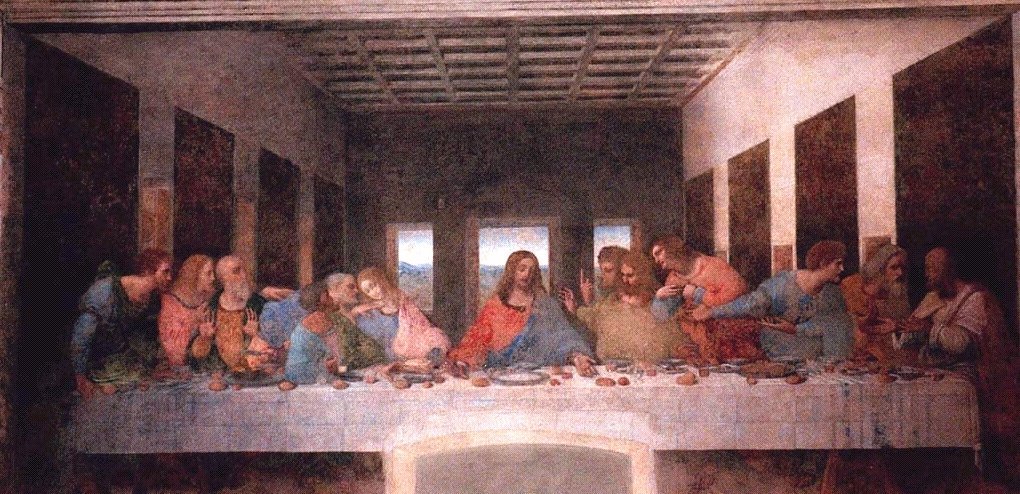
Who can partake of Communion? As with most questions like this, it seems to demand a community of discernment, a group who will live in response to Jesus and in response to the texts of Scripture. It is interesting that Luke-Acts is rather ambiguous in the language used for communion. Is breaking bread a sacred meal or a normal meal (Acts 2:42, 46; 20:7)? I suggest that the ambiguity is intentional, that the common meal was the place for Eucharist. Every one ate. The children ate. The strangers were welcomed to the table. It was in the spirit of Passover where it was an opportunity to illustrate the narrative of our lives. Every time the bread was broken and the wine shared, they would remember and relive the gift of their identity.
The Corinthian problem with communion is interesting. The reason they were failing was that they were still living according to the principalities and the powers, playing the domination game. The rich did not wait for the poor. In our community we still have a problem understanding this. We have turned the Eucharist into a private devotional time that happens to occur in the assembly. The people were taught somewhere that to 'discern the body' was to imagine the suffering of Jesus on the cross (1 Cor 11:29). It seems to me that Paul meant for us to look out for one another, to recognize that the alternative world proposed by a crucified Lord would mean that the old standards for separation were no longer in play. All should eat at the Lord's Table and receive His hospitality and ours. And as far as possible it should be a truly communal act.

Tuesday, March 14, 2006

God's Top Ten


Thinking about the Ten!

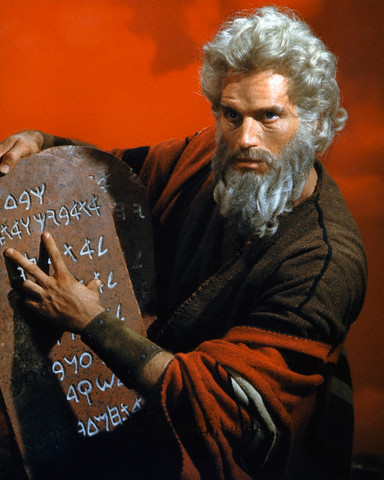
Ex 20:1-17
God spoke to the people of Israel, giving them instruction for the fullness of life, which is the meaning of Torah. God establishes his authority in the description of their relationship. Who could bring a person out of slavery? And I wonder if there are very many who would say, “I have never been a slave!” I have been a slave, and I am not sure that I am completely free. I am a slave to the flesh, to my desire for comfort, success, and affection. It is not that these things are unimportant to our humanity. They are very important, and I believe God is eager to have us recognize that the Lord will address those needs. However, we often live in fear that God cannot deliver ‘the goods.’ That is what the Ten Commandments seem to be about. Whom do you trust?

We are to have no other gods. Nothing is to supersede the ‘I AM.’ My most common idol is me. It is not that I think I am transcendent. I am keenly aware of my weaknesses. The problem is that I want control. Greed is a common idol, both among the rich and the poor. Family is a common idol. We will put family before God. Matter of fact, we are tempted to have a lot of ‘other gods.’

We are to treat the name of God with respect. Why would we abuse someone whom we trust? If God would reveal God’s name (YHWH), that seems to me to be a relationship creator. Would you ask someone their name and then ‘make fun’ of the name, or use it as a magic charm, an incantation, or as a word for unwholesomeness? I doubt if you could keep that relationship whole and healthy if you were given to that.

What do think about the Sabbath? We are pretty busy people. We fill our schedules and have a hard time resting. We are fearful that we will ‘do without’ if we don’t seek every advantage. God stopped working for a day. If God can take a day, then I am supposing that we could trust the world to the Lord’s care for a day.

What do you suppose that ‘honor your father and mother’ command is about? Probably it means to ‘take care of your folks.’ It does not mean that you are under their authority for all of your life. It seems to me that it means that you are always responsible to God for their care. It could be one of those organizing commands, too. There is a season when you are under your parent’s authority. In the Old Testament incorrigible children were stoned to death at the city gate (Deut 21:18ff). It could be that God is reaffirming parents as the one’s who are to have a season of authority.

Life is not at your disposal. That is why God said, “Do not murder.” We are not in charge (sovereign over life and death). I read an article in the New York Times last week (March 2006) about the ethics of terminating a pregnancy when the child was going to have birth defects. It is interesting to me that we want medical knowledge to preserve our pregnancies and we consider that beneficial. However, if that medical knowledge preserves a difficult pregnancy that God seemed to be attempting to terminate, and we are unhappy with the result, we complain again. We really do not want God to be in control.

Why do you suppose we are supposed to refrain from adultery? Of course, you know that it is destructive to our relationships. It is destructive of marriage and threatens the well-being of our children. It threatens the social fabric of every community where the parties make a life. Why does this command make the top ten? I suppose because God knew that we would struggle in our relationships. Could we trust God to provide for us? It is not easy to trust.

Theft is a manifestation of the same fear. It threatens the very same things as adultery. I suppose adultery is theft. We take something that does not belong to us. We take because we are fearful. Could we learn to live with what we can earn? Could we learn to work hard and be satisfied with the results?

We are to tell the truth in court. I know that we have thought of this command as telling the truth in general, which is also important. However, I think this command is about making false accusations. Why would we be tempted to do this? Again, I think this is about the social fabric of our culture. If a person was to make an accusation against you, you would be harmed regardless of the truth. God is interested in us being careful with our relationships and with our communities.

We are not supposed to want what our neighbors possess. This seems to me to be a general principle that concludes this list. Trust God instead of wanting what does not belong to you.

Wednesday, February 22, 2006

Listen!


Mark 9:2-8 (NRSV) 2 Six days later, Jesus took with him Peter and James and John, and led them up a high mountain apart, by themselves. And he was transfigured before them, 3 and his clothes became dazzling white, such as no one on earth could bleach them. 4 And there appeared to them Elijah with Moses, who were talking with Jesus. 5 Then Peter said to Jesus, "Rabbi, it is good for us to be here; let us make three dwellings, one for you, one for Moses, and one for Elijah." 6 He did not know what to say, for they were terrified. 7 Then a cloud overshadowed them, and from the cloud there came a voice, "This is my Son, the Beloved; listen to him!" 8 Suddenly when they looked around, they saw no one with them any more, but only Jesus.

It is interesting to me that Jesus takes these three characters with him to the mountain top. The language is emphatic, apart, by themselves. Jesus and this inner circle of imperfect men get a glimpse of glory. Was it a moment of authentication? Was Jesus giving these three the inside scoop to what was really going on? Was it a moment to say, “Even if the veil was lifted and you could see what was really going on, you would still say stupid things?”

How did they know it was Elijah and Moses? Did Jesus make the introductions? Were they wearing name tags? Of course, we move right past those odd things and into the apparent point. God was speaking, had been speaking. God spoke through Moses and through Elijah. Israel has the Law and the Prophets. Now, behold, he does a new thing and speaks through the beloved Son. The point was to listen to God.

If we could see beyond the veil, how would we respond? Would we be struck dumb, as Peter was? Would it be awe-full? Would we be deeply moved and encouraged to know that God was still speaking, still involved in the mess down here? I think Jesus picked three guys that would talk about it. They weren’t afraid of sounding stupid.

Breaking News


2 Corinthians 4:3-6 (NRSV) 3 And even if our gospel is veiled, it is veiled to those who are perishing. 4 In their case the god of this world has blinded the minds of the unbelievers, to keep them from seeing the light of the gospel of the glory of Christ, who is the image of God. 5 For we do not proclaim ourselves; we proclaim Jesus Christ as Lord and ourselves as your slaves for Jesus' sake. 6 For it is the God who said, "Let light shine out of darkness," who has shone in our hearts to give the light of the knowledge of the glory of God in the face of Jesus Christ.

What is the gospel? I think we have a tendency to reduce it to something that we can capture in a sound bite. The gospel is ‘death, burial, and resurrection,’ we might say. I would ask, to what end? What makes that GOOD news? What makes it NEWS? Jesus came saying that he was the truth. He did not come saying that I have some propositions for you (not that he did not have propositions). He came claiming that he was truth, that he was offering himself as an example of what was truly human, as the love of God for the world, as an invitation to a benevolent relationship with the Creator. Clearly there was an inversion of the usual way of things in the ‘breaking news.’ We who claim to know something about this news proclaim ourselves as ‘your slaves for Jesus’ sake.’

Is that our way? Jesus’ way of sacrifice? Would we become a slave to those we meet, to those we know, to those who trouble us, for Christ’s sake? It is in those moments that the light shines out of darkness. And every time the light shines….it is breaking news all over again!

Wednesday, February 15, 2006

Psalm 41 - The Blessing


Psalms 41:1-13 (NRSV) 1 Happy are those who consider the poor; the LORD delivers them in the day of trouble. 2 The LORD protects them and keeps them alive; they are called happy in the land. You do not give them up to the will of their enemies. 3 The LORD sustains them on their sickbed; in their illness you heal all their infirmities. 4 As for me, I said, "O LORD, be gracious to me; heal me, for I have sinned against you." 5 My enemies wonder in malice when I will die, and my name perish. 6 And when they come to see me, they utter empty words, while their hearts gather mischief; when they go out, they tell it abroad. 7 All who hate me whisper together about me; they imagine the worst for me. 8 They think that a deadly thing has fastened on me, that I will not rise again from where I lie. 9 Even my bosom friend in whom I trusted, who ate of my bread, has lifted the heel against me. 10 But you, O LORD, be gracious to me, and raise me up, that I may repay them. 11 By this I know that you are pleased with me; because my enemy has not triumphed over me. 12 But you have upheld me because of my integrity, and set me in your presence forever. 13 Blessed be the LORD, the God of Israel, from everlasting to everlasting. Amen and Amen.

I have been thinking about the whole idea of blessing. Happy (or blessed) are those who consider the poor. To be blessed is to manifest the presence of God. Those who pay attention to the poor are those who are living the blessed life, who are manifesting and cooperating in the work of Yahweh. Caring for the poor is not the job of some impersonal government. Caring for the poor is something that should interest those who consider themselves church people. And those who are cooperating with the interests of God are promised God’s attention.

It is interesting to me that the promise is not that you will not suffer or get sick. Jesus cares for the poor and he does not escape suffering or death. I wonder what it means to be healed. Healing and salvation seem to be seriously linked. Is it a cop-out to say that salvation is a matter of wholeness, of the ability to overcome brokenness? Salvation is a matter of re-integration, the sewing back together of that which has dis-integrated?

Some of us have a tendency to say that the sick are un-blessed. We might think, “Oh I escaped getting sick! What a blessing! God was looking out for me.” Those who do get sick…well they deserve what they get. They are reaping what they have sown, right?

Have you ever had the experience of being left by a friend who cannot bear your suffering? I have not felt that sting, but I believe that it happens. “A deadly thing has fastened on me.” A thing of Belial…a demonic thing, that is what the text says. Verse ten has an interesting little poetic twist. The Hebrew for “repay” has the same consonants as “bosom friend” in verse nine. It is also interesting that this prayer asks for permission to exercise vengeance. I think that is an honest response from a hurting heart. I suspect that God’s answer would be, “I think not. That is not your task.”

Why would God uphold this sufferer, if I were that sufferer? It would not be because of my integrity. I only have integrity if I have had some help (getting sewn back together). It is a mystery to me. God wants to bless, to set us in God’s Presence forever. That is the blessing, from ever-lasting to ever-lasting. Amen.

Tuesday, February 14, 2006

Isa 43 - A New Thing


Isaiah 43:18-25 (NRSV) 18 Do not remember the former things, or consider the things of old. 19 I am about to do a new thing; now it springs forth, do you not perceive it? I will make a way in the wilderness and rivers in the desert. 20 The wild animals will honor me, the jackals and the ostriches; for I give water in the wilderness, rivers in the desert, to give drink to my chosen people, 21 the people whom I formed for myself so that they might declare my praise. 22 Yet you did not call upon me, O Jacob; but you have been weary of me, O Israel! 23 You have not brought me your sheep for burnt offerings, or honored me with your sacrifices. I have not burdened you with offerings, or wearied you with frankincense. 24 You have not bought me sweet cane with money, or satisfied me with the fat of your sacrifices. But you have burdened me with your sins; you have wearied me with your iniquities. 25 I, I am He who blots out your transgressions for my own sake, and I will not remember your sins.

What an interesting summary of the relationship between human beings, and especially those who choose to be church, and the God who formed them (us). There is a season to forget what has happened in the past, a season for the change in focus. For Israel, they were to forget the season of captivity, back when they were oppressed. How nice it would be to forget a relationship that was toxic, or a moment that we have been holding onto, those kinds of negative moments that we replay in our minds like videotape of a bad movie.

Moments, and words, define us. There was a book mentioned in the New York Times today (02 14 06) by Deborah Tannen. She is a linguist who studies the impact of conversation. The title of her book is _You’re Wearing That? Understanding Mothers and Daughters in Conversation_. Tannen is seeing that we are powerfully impacted by the words that get spoken in relationships that matter to us. I wonder, if we could choose to forget the former things. Could we forget at least enough to be free, to look forward to a new thing that God might be doing in our lives? It must be possible. God claims to “make a way in the wilderness.” I like the metaphor of the wilderness for the journey of life…it is a challenge, a place where we cannot survive on our own. We need the community. We need Providence. However, we often live under the illusion that we are managing this life on our own.

“Yet you did not call on me.” We stop talking to God. We stop being sorry for trying to run the show, or for living unloving lives. We fret…a lot! What do we give God? What does God get out of this relationship with human beings? Not much, if the truth were told. I am mystified by God’s persistent attempts to remain in a relational with us (me). If I bring a sacrifice, it is really a disguise for a blessing for me! Could I give God the ‘fat portions”? I find that funny! God likes the fat portions? What I do give God is a burden. I give my sins. I weary God. Yet He remains the one who blots out my transgressions…for his own sake. Amazing.

What is God expecting from us (me)? Praise. He is expecting his church people to be priests for the world. We are to offer our sacrifices of praise to God for the sake of the world. We are to love the world that God loves, the whole world. The world is troubled. God loves the world. He sent His son. His Son sent those who would be disciples (the church). He did not call them to keep house, but to go love the world. God is about to do a new thing in the wilderness. He is doing it through the likes of us…for the sake of the world. Will we cooperate? Will we go along with the new thing, or are we stuck in the past? I wonder.

Thursday, January 05, 2006

Simplicity

Hans Hoffman, artist: The ability to simplify means to eliminate the unnecessary so that the necessary may speak.

Leonardo da Vinci: Simplicity is the ultimate sophistication.

John Cheney, poet: The happiest heart that ever beat / Was in some quiet breast / That found the common daylight sweet, / And left the rest to God.

Japanese proverb: A garden is perfect not when nothing more can be added, but when nothing more can be taken away.

E. F. Schumacher, economist: Any third-rate engineer or researcher can increase complexity; but it takes a certain flair of real insight to make things simple again.

Charles Mingus, musician: Making the simple complicated is commonplace, making the complicated simple -- that's creativity.

Doris Janxen Lonacre, author: The trouble with simple living is that, though it can be joyful, rich, and creative, it isn't simple.

Friday, December 02, 2005

Managing Stress


How do you manage the pressure or stress in your life? We all have stress. Stress is like conflict. It is inevitable. Your ability to manage stress well will very likely mean the difference between success and failure, happiness and despondency, satisfaction and disappointment. Here are some management strategies that you might find helpful.

Be willing to fail. Even if you are driven not to fail, there is a benefit in being willing to risk. I really hate to fail. However, I understand that if there is no risk, there is no reward. Some people are crushed by their failures. The truth is that we will all fail. The measure of your character is how you respond to adversity, to failure.. God will forgive you, and so will others if you will face your failures with integrity and learn from your mistakes.

Keep it Simple. You have control over your stress levels. Most of our stress is self-imposed (self-inflicted) or at least self exacerbated. Living a simple life is a joy. No one requires us to live the life of the soaps. Keep your desires in check. Love your family and do your work. If you have ever been tangled up in sinful behavior, and I am thinking maybe you have, you know that the simple life is a lot less stressful!

Listen to the truth. Lean on your family and friends. There will be critics, always. Some will have bad motives, wanting to discourage or demote you. Most of the time, your critics are feeling a loss by what you say or do. If you can understand what might be at stake for them, you can listen with less anxiety. Others are people that want to promote, instead of demote. You need their truth telling! Find those people and lean on them. Speak frankly to them and let them speak frankly to you. There needs to be a place for unmasked honesty.

Historical Perspective. It is important to have a good sense of where you stand in the big picture. Sometimes I just have to look into the sky on a starry night. I am small. History is large. And God is above it all. In the larger scheme, my success or failure on a particular task will not change the course of everything. But in a few cases, the impact of what we do, does count. Don't forget that either. Your words and deeds matter.

Stay on task. Pressure is best dealt with head on. There are so many distractions and time consumers that come our way throughout the day. You can fill your whole day with those things. God gives us each day as a gift to use. When the day is over, we will never reclaim the time. Spend it as if it were precious currency. It is.

Pray and Sing. In the Bible, Peter writes, Cast all your anxiety on him because he cares for you (I Peter 5:7). You will have to reserve time for this. Take time to talk with God. Let him bear your burdens. Most of all, let him be your significance. That will take most of the pressure right off your shoulders. You are important because he made you that way. And sing. God said that in singing we would be filled with His Spirit (Ephesians 5:18-20). The whole cosmos should sing, and perhaps it does (Rev 5:13)!

Remember His Presence. Consider the ravens. Consider the lilies. Consider the angels. Are not all angels ministering spirits sent to serve those who will inherit salvation? (Hebrews 1:14).

Trudge. When the tediousness comes and the pressure mounts, put your head down and press on. If it is number crunching, cutting the grass, or dealing with unpleasant business or unpleasant people, apply yourself and have the discipline to do what is right. Finish the race. We always feel a sense of relief in the aftermath of responsibility fulfilled.

Take care of your body. Eat right. Get some exercise. Go to bed at a reasonable hour. Your body is a tool that God has given you. Take care of the tool, so that you can accomplish all that God has set before you to do.

Use and enjoy. Pressure is also the gift of God. Pressure is the urge to do, the need to do. It is not a flame to be extinguished, but a fire in the soul to blaze the trail of life. Don't wilt under the heat, but rather direct it with purpose!

Thursday, December 01, 2005

Slow?

Is God Slow?

How long do we wait? Oh, were we waiting? Have you ever had someone tell you that you were as slow as Christmas? If you were waiting for your annual pair of shoes that would come to you as a Christmas gift, Christmas could be slow in coming.
If we lived in a place where there was oppression, maybe we would cry out to God that he would bring his justice to bear. If we lived in a place where people could trap you with easy credit…or if we lived in a land that cultivated your dissatisfaction, that always encouraging you to want more, to need more. If you lived in a world where the pressure was mounting all the time, and you felt behind, less than, small…. Or if you found your self in a bind where you could just die. You might cry out for God to hurry. “Make things right, Lord!”
Why doesn’t God jump in to set things right in Rwanda, in Darfur where genocide is still going on? Why does God not keep children from suffering abuse from their parents hands? And why is living and dying so difficult? From managing finances, to families, to the daily grind…life is sweet…and difficult.We want justice in the world. I really think we do. But we are hesitant about justice for ourselves. That is what I think this text is about. Justice. When will we get it? What is God’s answer?Justice is coming. God will make things right. You might want to take the opportunity of the mean time to make every effort.He is patient with you. Our Lord’s patience means salvation.

2 Peter 3:8-15 (NIV) 8 But do not forget this one thing, dear friends: With the Lord a day is like a thousand years, and a thousand years are like a day. 9 The Lord is not slow in keeping his promise, as some understand slowness. He is patient with you, not wanting anyone to perish, but everyone to come to repentance. 10 But the day of the Lord will come like a thief. The heavens will disappear with a roar; the elements will be destroyed by fire, and the earth and everything in it will be laid bare. 11 Since everything will be destroyed in this way, what kind of people ought you to be? You ought to live holy and godly lives 12 as you look forward to the day of God and speed its coming. That day will bring about the destruction of the heavens by fire, and the elements will melt in the heat. 13 But in keeping with his promise we are looking forward to a new heaven and a new earth, the home of righteousness. 14 So then, dear friends, since you are looking forward to this, make every effort to be found spotless, blameless and at peace with him. 15 Bear in mind that our Lord's patience means salvation.

Have you ever wondered why you were not instantly destroyed when you did what was wrong? People think that since God is slow, since no lightning strikes them dead, that God does not care.
What a terrible day it will be! It will be frightening to see the heavens disappear with a roar, the elements melt and the earth laid bare. It is like any of the great catastrophes. What matters to you in moments like that? When you have to pack the car to run from a hurricane. We thought about what was important. What if we were not coming back? It was interesting what some of you saw when you were on the road from Hurricane Rita. People were demonstrating their real character. Some were so helpful and gracious. Some were selfish, desperate, and thoughtless. Some tossed garbage as they went. Some cared for those in distress.

This passage of Scripture is telling us something. The most important things are not things. When all of this burns up, we will hardly notice. God is promising a new heaven and a new earth. God is promising a home for righteousness. The Home of Righteousness. Heaven.
Hebrews 12:22-23 (NRSV) 22 But you have come to Mount Zion and to the city of the living God, the heavenly Jerusalem, and to innumerable angels in festal gathering, 23 and to the assembly of the firstborn who are enrolled in heaven, and to God the judge of all, and to the spirits of the righteous made perfect,

You Have Come!
It is coming. What kind of people will you be?
Holy. Godly. Does that sound boring? It means loving, joyful, peaceful, patient and kind. It means living in imitation of the character of God. It means living for justice for those who are being treated unjustly. It is welcoming the stranger. It is generosity. It is caring. About people. About animals. About creation. And it is about patience.
Wednesday, November 02, 2005

A Prayer For George

This is a prayer written by Will Willimon...

News of the death yesterday of Sgt. George Alexander, Jr., from woundsreceived in Iraq, has prompted me to prayer. Sgt. Alexander, 34, was agraduate of Chilton County High and an Alabama native. A Prayer for George Alexander, Jr. Lord Jesus, King of Kings, Savior of the World, Prince of Peace, hear thisprayer for George, son of Alabama, two thousandth American soldier to die inour war in Iraq. Receive him, we pray -- a lamb of Your flock, a sinner forwhom You have died, a cherished and beloved Child of God -- and one who isat peace at last, because he is with You. George had an Alabama boyhood, an Alabama youth, and Alabama dreams. I prayfor his mother, for his family and friends, his church, and all those forwhom his death means not only the ending of his dreams, but the beginning oftheir lifetime of grief and loss. Lord, help us to feel some measure oftheir pain. Save us from offering cheap consolation or patriotic platitudesin the face of their loss. Instill in our hard hearts a determination towork with You for a government in which we shall make peace as quickly andresourcefully as we make war, a country that loves Your righteousness andjustice more than our security and power. One and Only Way, Truth, and Life, give us the grace to live by Your Wordrather than by our weapons. Lord Jesus, You never lifted Your hand againstanyone, You refused to defend Yourself even when unjustly attacked, Youresisted violence with peace and nonviolence, and You never, ever told usthat war was the answer to anything. When will we move from worshipping Youto following You? Seeker and Lover of the Lost, forgive us of our sin of attempting to solvethe world¹s problems through violence and war, forgive us of our willingnessto once again allow old people like me to send young people like George tomake war on others and to suffer and die to preserve our privileges, forgiveus for loving our freedom more than Your peace, and for treating Your giftof life so casually. Give us, in our grief for our fallen daughters andsons, an equal amount of grief for the deaths of the twenty-five thousandIraqi sisters and brothers in Christ. Grant us a miracle: that George benot only the two thousandth young American to die in this war, but also thelast. Judge of us all, I confess that I have not prayed enough, have not embodiedYour truth enough, have not been critical enough of our political leaders,have acquiesced to the plans of the initiators and makers of war, ratherthan to join the ranks of Your blessed makers of peace. In Your name, andin heartfelt grief for the loss of George, and in bold confidence in Yourcoming Kingdom, I pray. Amen.

Wednesday, October 19, 2005

Good Religion

Religion is a really good thing...maybe.

Have you heard people say that they were not religious, or that they were opposed to religion? Somehow they think that they can be Christian, or a follower of Jesus without being religious. Religion sounds stuffy, and less than authentic. What I think they mean is that bad religion is something to be avoided. Good religion however, is exactly the right thing.

What does it mean to be religious? The word is eusebeo. It means to worship or to show respect. The test of religion would be: Are we really paying attention? Is our focus upon the character and nature of God?

In our nation's archives there is an account of two ladies from Tennessee who came before President Abraham Lincoln at the conclusion of the Civil War. They were asking for the release of their confederate husbands held as prisoners of war at Johnson's Island.
Lincoln put them off until Friday, when they came again. Again the President put them off until Saturday. At each of the interviews one of the ladies stressed to Lincoln that her husband was a religious man. After the Saturday interview the President ordered the release of the prisoners. Then he turned to this lady and said, "You say your husband is a religious man. Tell him when you meet him, that I say I am not much of a judge of religion. In my opinion, however, the religion that sets men to rebel and fight against their government ... (so that they can) eat their bread on the sweat of other men's faces, is not the sort of religion upon which people can get to heaven!"

The way of the cross, it seems to me, is one that is subversive in a way that changes the status quo not through the power of this world, but rather loves so radically, so sacrificially that the world cannot help but be changed. What if Lincoln and his generals had also chosen to walk down south and stood to defend those enslaved without firing a shot? To give your life in such a way, now that is freedom! And that is good religion.

Tuesday, September 06, 2005

Hurricanes and Compassion


Hurricanes and Compassion

People often want to know if human beings are basically good, or fundamentally evil. In the most challenging of circumstances, the real nature of people is exposed. Saturday evening and night I went to the George R Brown Convention Center to help. I tried to go to the Astrodome, but they had all of the volunteers they could use. I think that is a testimony to the goodness of people. I have heard some preachers debating the need for international aid, and I spoke up and said that it was a funny notion. It is not that we do not need the community of human kind to pitch in, it was just that in the heat of the moment, no one is saying, "Where are the French when you need them!"

I was a bit nervous as I went to work at the GRB. That lost feeling is troublesome. If anyone asked me a question, I would not know the answer. I did not know where to stand or what to do. I found myself in line to receive a family that was getting off a bus from Louisiana. There were eight people, four young boys. My job was to take them through the line to get shoes (if they needed them), two days worth of clothing, soap and towels and tooth brushes and the like. We spent about three hours together. One young boy who was about 8, named Kahlil warmed up to me right away. He became my leaders. Where he wanted to go, we went. His brother Raheem was a bit more reserved. The older boy Keiron, was confident and serious. The littlest boy just wanted things to be normal. Then one of them said, "Where are the French when you need them!" (Not really.)

They were from the west bank of the Mississippi. Water rose into the second level of their house. They heard gunfire outside their house. Then some military men came and told them to get out of their house. They crawled through a window into deep water. They did not tell me about snakes and gators. They did say that they reached some dry ground and a man who had ‘borrowed’ a car from a car lot picked them up and took them to the mall. The mall was horrid. They did find their way onto a bus and they arrived in Houston Saturday night, five and a half days after the storm. We settled them in to their air mattresses and had a prayer, and I went to the next task.

I wandered about the GRB looking for a way to make myself useful. I found my way into the volunteer line. I did not know that was the starting place! A lady asked for two people to come with her, so I went. I spent the next four hours working security, checking baggage for contraband. Anything that could not be brought on to an airplane or into a prison could not be brought into the GRB. It was hard to taker their cigarettes and lighters. I took one woman’s comb that had a sharp and pointed end, and she began to cry. I felt terrible. The last bus in that night was full of special needs children. We did not search their bags. I was thankful.

Then I went home to my air-conditioned home. Troubling.
Are people good? I think so. We are compassionate. Our hearts ache. I am thankful for that.

Friday, August 26, 2005

Family Laws


Ten Laws of Family Life

  1. Emotional Distance does not solve problems. Sometimes emotional distance actually transfers problems to other relationships. We change partners and keep the problems.
  2. Loss and Replacement. When people suffer a loss there is often a rush to replace the loss. The immediate pain may be reduced, but the potential for change is low. There are lessons to be learned from the loss.
  3. Chronic Conditions. If a perpetual problem exists, identify the person or persons who are reinforcing the dysfunction. The situation in the family will have to get worse before it gets better.
  4. Pain and Responsibility. I have to be able to allow another member of the family to struggle, to hurt and suffer, especially if there are consequences that need to fall upon them. We must learn to sit still and wait. Within reason, natural or logical consequences must fall and we must learn from them.
  5. The Paradox of Seriousness and the Playfulness of Paradox. Some situations are only made worse by standing around and saying, "Isn’t this awful?" Being too serious is as a bad as being too flippant. Over reaction and under reaction both have a price. Joyfully work the problems.
  6. Secrets and Systems. Keeping a secret is like plaque in the arteries. Let there be none in your family. Get all of the information out on the table. Reality is our best friend. The unmentionable is unmanageable!
  7. Sibling Position. Our position in our family of origin does in fact teach us certain roles to play. These roles are ones that we bring with us into our nuclear family as well as our congregational family.
  8. Diagnosis can be addicting. We can spend so much time diagnosing other people that no change is ever effected. Labeling is easier than enacting a cure.
  9. Symmetry. If one extreme polarity exists in a family, you will probably find a counter balance.
  10. Families are durable and resilient. Survival is probable.

    How might these make a difference in ministry? Churches are families.

Edwin Friedman - Generation to Generation

Tuesday, August 23, 2005

Evolution - Scientists and Creationists


There is a debate going on stirred up by the intelligent design proponents. It seems to me that some of the scientists and the creationists are talking past one another. The intelligent design people are asking the scientists to be unscientific. They want to say, "When you get to a mystery, like the mystery of the similarity of genes found in humans, mammals, worms and bacteria, couldn’t you just say that ‘God did it!’?" A scientist is compelled to continue asking the questions without surrendering to the mystery. I appreciate that. I will draw my own conclusions somewhere a long the way, without demanding that someone quit asking the observable questions. We are thankful for Copernicus and Galileo, who did not stop seeking the truth about the world. When I see the similarities in genes and embryos, I will see economy of Design rather than common ancestry through natural selection. My feelings won’t be hurt when some scientist says, "That’s unscientific!" I am not a scientist. I am a theologian!

I am also comfortable with evolutionary theory, at least in a macro sense. Things change over time. That is evolution, right? I think we should not ignore good evidence. We should be observant. We should ask questions. We would do well not to limit ourselves to our own disciplines, too. Theologians should be reading chemistry and biology, as well as philosophy and the Bible. What I am interested in is the truth. I think we can handle the truth. Virtue, it seems to me, demands that we have our eyes and hearts and minds open. This is the world that God has made, and it pours forth speech (Ps 19:1-4). We should listen. Paul Woodruff says, "The writer who is serious about virtue can’t stay behind the boundaries of a single academic discipline; the subject brings together poetry and philosophy and the history of ideas and puts them all to work on a huge live-wire of a question -- how we should live our lives." If the scientists or the creationists forget the point of it all, we should not.

Of course, you know, I believe that God created the heavens and the earth, that he created a moral agent out of mud.

Wednesday, August 17, 2005

Dangerous Listening/Dangerous Speech


Having God in your presence is such a dangerous thing. It is so difficult to follow our own desire when God is around. How difficult dating would have been if I had known that God was coming along! If we had an inkling of an idea that God was paying attention, I think we would either hide, or we would shoo him away.

As I read Scripture it seems to me that you really can do those things. We can run away. Did you ever play peek-a-boo with your children? Why was that fun? In their minds, if they could not see you, then you were not present. If we do not look at God, or consider that he could see and know what we are up to, then we are off the hook. We can ask God to leave, even.

Moses tells the story of the Ten Commandments. He said to the people, "You said, ‘The Lord our God has shown us his glory and his majesty, and we have heard his voice from the fire. Today we have seen that a man can live even if God speaks with him. But now, why should we die? This great fire will consume us, and we will die if we hear the voice of the Lord our God any longer. For what mortal man has ever heard the voice of the living God speaking out of fire, as we have, and survived? Go near and listen to all that the Lord our God says. Then tell us whatever the Lord our God tells you. We will listen and obey.’"

Moses, you go take the risks for us. We will listen to you. We say that we will obey, but really we will just evaluate what you have to say and... from a safe distance decide our course! What a deal! God says, "Okay Moses. Let’s follow their plan. Go, tell them to return to their tents."
And then, in the here and the now we wonder where God is. We marvel at the fact that we cannot hear God speak.

Annie Dillard says, "It is difficult to undo our own damage, and to recall to our presence that which we asked to leave. It is hard to desecrate a grove and change your mind. The very holy mountains are keeping mum. We doused the burning bush and cannot rekindle it; we are lighting matches in vain under every green tree. Did the wind use to cry, and the hills shout forth praise? Now speech has perished from among the lifeless things of earth, and living things say very little to very few.

"The silence is all there is. It is the alpha and the omega. It is God’s brooding over the face of the waters; it is the blended note of the ten thousand things, the whine of wings. You take a step in the right direction to pray to this silence, and even to address the prayer to ‘World.’ Distinctions blur. Quit your tents. Pray without ceasing."

Quit your tents! Come out! Look and listen. God speaks!

Tuesday, August 16, 2005

Moments of Blindness


I have been working on a project for school. It is the last big thing of my formal education...well unless something else crops up that I would like to learn in a formal way. I spent a couple of months writing the prospectus. I knew that the next step was to submit it for critique. I also have great confidence in the people who will critique my work. However, when the criticism came, I had this sense of failure, of being overwhelmingly inadequate. One of my advisors wanted me to read some other material. I read it and understood about half of it. (J. L. Austin’s How to Do Things With Words and John Searle’s The Construction of Social Reality) On Friday, I felt like surrender. I sent a note to my advisors and I got a response that was encouraging. Despair has its effect, and I think it has some value. The effect is humility.
Humility should not paralyze us. In fact, perhaps it should set us free. Today, I happened upon these words from Annie Dillard.
Speaking to someone who has had success in writing a book: "I have an urgent message for you. Everyone feels like a fraud …separate yourself from your work. A book you made isn’t you any more than a chair you made, or a soup. It’s just something you made once. If you ever want to make another one, it, too, will be just another hat in the ring, another widow’s mite, another broken offering which God has long understood is the best we human’s can do – we’re forgiven in advance."
We are forgiven in advance. That is the nugget of information that releases us to try. When despair comes, we have been blinded to the goodness that surrounds us. In those moments, when we think everything is bad, we are most blind. Every offering is broken. That should not prevent us from humbly making the offering.

Monday, August 08, 2005

Grief


In February, Grady Burke was killed in the line of duty. He was a Houston firefighter. Frank Cordua is on trial for manslaughter because he was cooking drugs in an abandoned house. His drug cooking ignited the house and station 46 responded to the blaze. Captain Burke was on the hose leading the charge into the fire. The house collapsed on him. I have been called to testify at the trial this week. My job is to describe the impact of Grady’s death on his family. His wife Cindy is a courageous woman. She is a firefighter’s wife. Their three children are exceptional people. Hannah, Hailey and Hunter have suffered an irreplaceable loss, however. Their lives have been redefined by the death of their father.

I was listening to a song by Natalie Grant this morning that I thought was an appropriate prayerful response to their grief. The song is about the loss of a child. But the lyric is so well written for godly grief that it effectively speaks a word of suffering and comfort.

Two months is too little, they let him go, they had no sudden healing
To think that Providence would take a child from his mother while she prays is appalling.
Who told us we’d be rescued?
What is changed and why should we be saved from nightmares?
We’re asking why this happens to us who have died to live? It’s unfair!

This is what it means to be held.
How it feels when the sacred is torn from your life, and you survive.
This is what it is to be loved.
And to know that the promise was when everything failed, we’d be held.

This hand is bitterness.
We want to taste it, let the hatred know our sorrow
The wise hand opens slowly to lilies of the valley and tomorrow.

If hope is born of suffering…
If this is only the beginning…
Can we not wait? For what? Our watching for our Savior?

What I appreciate about this is the honesty. This is not a message that says that if we were only faithful, we would not suffer. God does not deliver the blows on our hearts, either. We live in a fallen world where people are given the freedom to act. With that freedom comes also the responsibility for our choices. Who told us we’d be rescued? God does not spare us from living in this world of choice. The world is full of pain, and God loves the world.
Yes, the wise hand opens slowly to the lilies of the valley and tomorrow.

Thursday, August 04, 2005

Out of the Boat


The first lesson that I taught as the preacher for the Southeast church was about walking on water. I was encouraging our people to step out in faith as they were leaving what was comfortably known into an adventure with Jesus.

I still believe that the adventure ‘out there’ is worth the risk. God’s mission in the world, as I see it, is bringing order out of chaos. We are invited to participate in the mission of God in the world. Of course that means that we are going to have to GO out of our little circles of safety, out where the chaos is happening!

Then today I was reading one of my favorite preachers. He always makes me re-think. Re-thinking is a virtue, I think (is that as funny to you as it is to me?)
Here is what Fred Craddock says,

Only God can walk on the waves. That is what the Bible says. In Job, in Isaiah, in Habakkuk, in the Psalms, it is God who walks on the storm, God who makes a path in the sea. Why? To show a miracle? To say, “Hey, look, I’m walking on water.” No, don’t be shallow. In ancient times the sea was the place of evil. The evil monster was there; the Leviathan was there. The enemy of all that we know as good and right is there in the water. In the Bible, the water is the abode of all the forces that are against us. And God walks on the sea. In other words, there is no power, no storm, no wind, no force in the world that God cannot conquer, no evil over which God is not superior, nothing that can destroy your life because God loves and cares for you.

Jesus’ walking on the water is not to be understood as a miracle. Look at it, listen to it. Jesus comes in the storm on the sea and says, “Take heart, I am?” These words are translated, “It is I” or ’I am he?’ but what Jesus actually says is, “I am.” “I am”-- that’s the name for God. God has come to them in the storm in the person of Jesus, and what happens? They cannot believe it. At first they say, “It’s a ghost, it’s a ghost!” From a distance Jesus does indeed seem like a ghost. I know a lot of people who have never made friends with Jesus, and he is still out there as a ghost-like thing.

But Jesus gets closer, and Simon Peter says to him, “If you are . . . if you are, tell me to come to you on the water.” Do you recognize those words? Do you remember hearing those words before? When Jesus was tested in the wilderness, the devil said, “If you are the son of God…” The words of Simon Peter are the words of the tempter. I am putting you to the test, Jesus. If you are really the son of God…

It is no wonder that two chapters later Jesus says to Simon Peter, “Get behind me, Satan.” So the fact that Simon Peter could walk on the water is just not a little thing. I’ve heard all those piddling little sermons that say that Peter tried to walk on the water but he took his eyes off Jesus and so he began to sink. Do you understand what is really happening here? Simon Peter doesn’t believe. He wants to put Jesus to the test, and in the attempt to test Jesus, he ends up testing himself and sinking. You don’t test God. Jesus got in the boat and everything was all right. It was quiet, and the others fell down in the bottom of that little boat and worshiped Jesus. (Matt 14:22-33)

Tuesday, August 02, 2005

Boredom is the root of all evil


We do so much better under pressure. We need the stimulation of direction. When we are bored we invent adventure. Fred Craddock says that watching the Indy 500 can lead one to being unchristian. The cars race round and round and round. They are going 230 MPH, round and round and round. They are going so fast it is hard to see the racing, the strategies, the art of the race. Instead you see the cars whizzz and whinnne past the grand stand. The monotony creeps in and you do not mean to be ugly…but you find yourself wishing that SOMETHING would happen! I think that is why Danica Patrick is such a hit among Indy fans. Yes, she’s cute. But cute does not get that much attention these days. She is tough and can race. She breaks up the boredom!
Of course, the issue is not Indy. Craddock is talking about church not racing. Have you been bored at church? I have been irritated and anxious at church. I am seldom bored. Of course, I am the preacher. When I think about the people who have gathered with a sense of expectation, it can be intimidating. I always have a message. If it is a Christian message, I can be assured that it is an important message. What is it that makes the people tune out, bob their heads as they fight off the sleepies? Some of them have been hearing the Bible for all of their lives. More information is boring! Some of them have not been listening for years! And sometimes, just maybe, I have ground it up into pabulum, too easy to swallow. What we need is a little bit of Bible scandal. What we need is a good 23 car pile-up. What we need is some eyes plucked out and hands cut off (Matthew 5:29-30)! That would wake everybody up, don’t you think! We need a few people dropping dead because their contribution was out of whack (Acts 5:5). What we need is not more information. We cannot allow reflection and discussion to become our central business. Craddock says “As long as life can be kept at a distance by stacking to ideas and concepts, a clever head can clear the way to operate a brothel and publish a new hymnbook at the same time.” (Overhearing the Gospel, p. 20)

Friday, July 29, 2005

Words Matter


Words matter.
The old cliché was that words would never hurt. The truth is that words have such great power. When someone chooses you, and says to you, “I choose you,” your world is changed. When you stand before God and friends and say, “I do,” your world is changed. If you stand before the judge and say, “I don’t,” that, too, changes the world.

We learn the power of words early. We learn the power of “no.” I had to convince my children that “no” was a very good word, but not a word that could be effectively used with mom and dad. We taught them the power of their kind words, “Please,” being the most operative.

Words matter. They are full of our shared hopes and dreams.

Barbara Brown Taylor is one of America’s preeminent preachers. She says:

“You don’t need a grand pulpit; any old housetop will do. Even the sun room will do at the nursing home, where you stand by the piano surrounded by wheelchairs full of old people. Some of those old people are dozing, some whimpering, and less than half of them are aware you are there.
Say “Resurrection!” in their presence.
Say, “Life everlasting!” say, “Remember!”
Just let those words loose in the room; just utter them in the light, and trust them to do their work. Speak to a support group for people with AIDS. Worship with them, laying hands on their heads and praying for their healing.
Say, “Mercy!” to them.
Say, “Comfort!” Say, “Beloved children of God!”
Just let those words loose in the room; just utter them and trust in their power to make people whole.

“Here’s the plan: God showed Jesus how; Jesus shows us how; we show the whole people of God how; they show the world how.”

(“Words We Tremble to Say Aloud”)

Your words matter. Your words change the world…for someone.